
NEWS
7-5-3 Ceremony
The Soto Mission of San Francisco Sokoji will hold its annual Shichi-go-san Ceremony on Sunday, November 16, 2025 at 10:30 a.m., 1:00 pm., and 3:00 p.m. at 1691 Laguna Street in San Francisco’s Japantown.
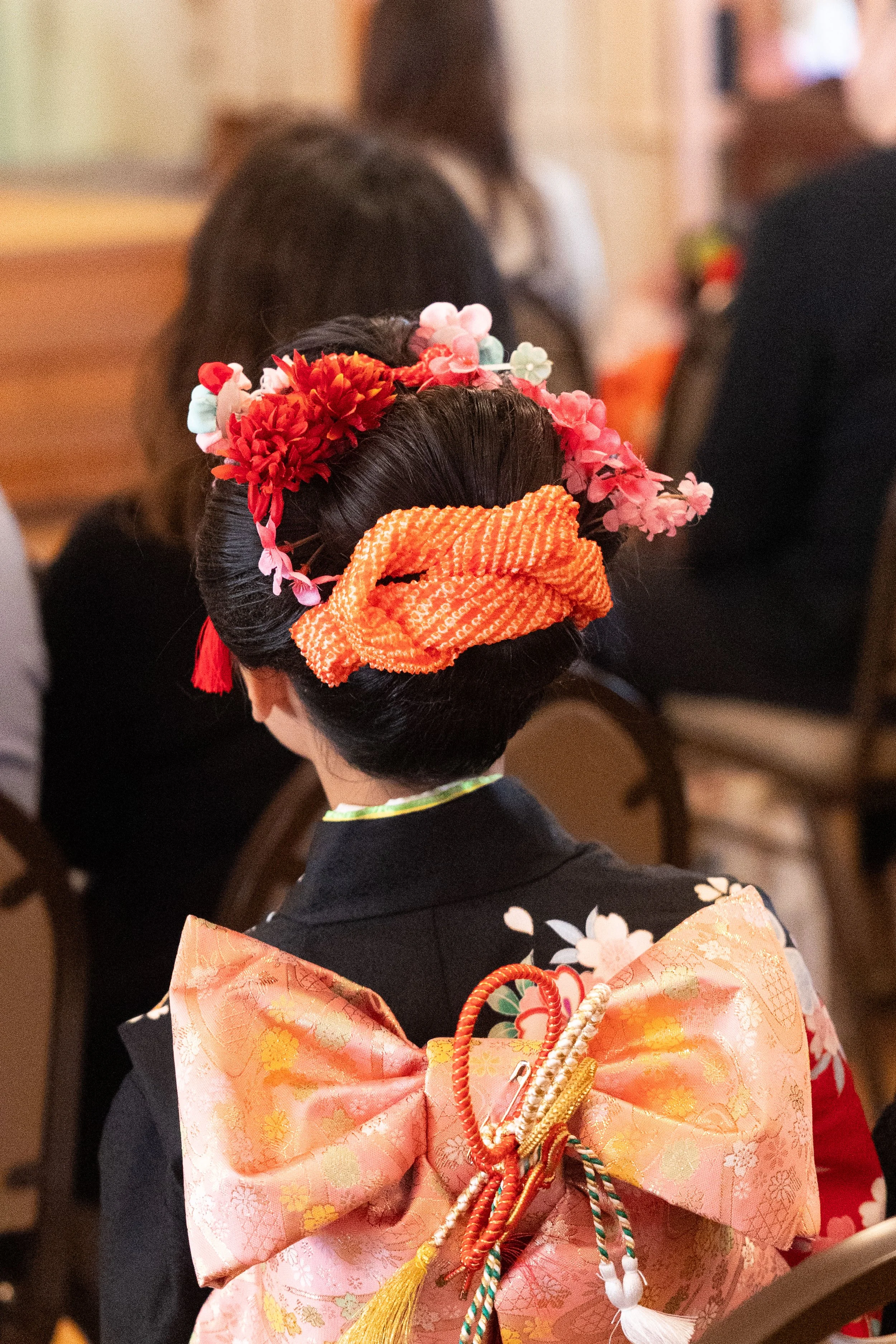
Shichi-go-san, which literally translates to Seven-Five-Three, is a traditional Japanese rite of passage celebration for children ages three, five and seven. This event occurs in Japan on November 15th of each year. Since the years of 3-5-7 are crucial years for a child's growth, special blessings are offered at this time. On this day, boys (ages three and five) and girls ages (three and seven) dress up either in traditional Japanese clothes (hakama, kimono, obi) or formal western dress and go to a shrine with their parents. Children are given long, thin, red and white chitose ame (thousand year candy) inside bags with illustrations of a crane and turtle– a symbol of long life and happiness. The red and white colors of the chitose ame are an auspicious color combination in Japan. These symbols indicate wishes for a child’s good health and growth.
Toro Nagashi 2026
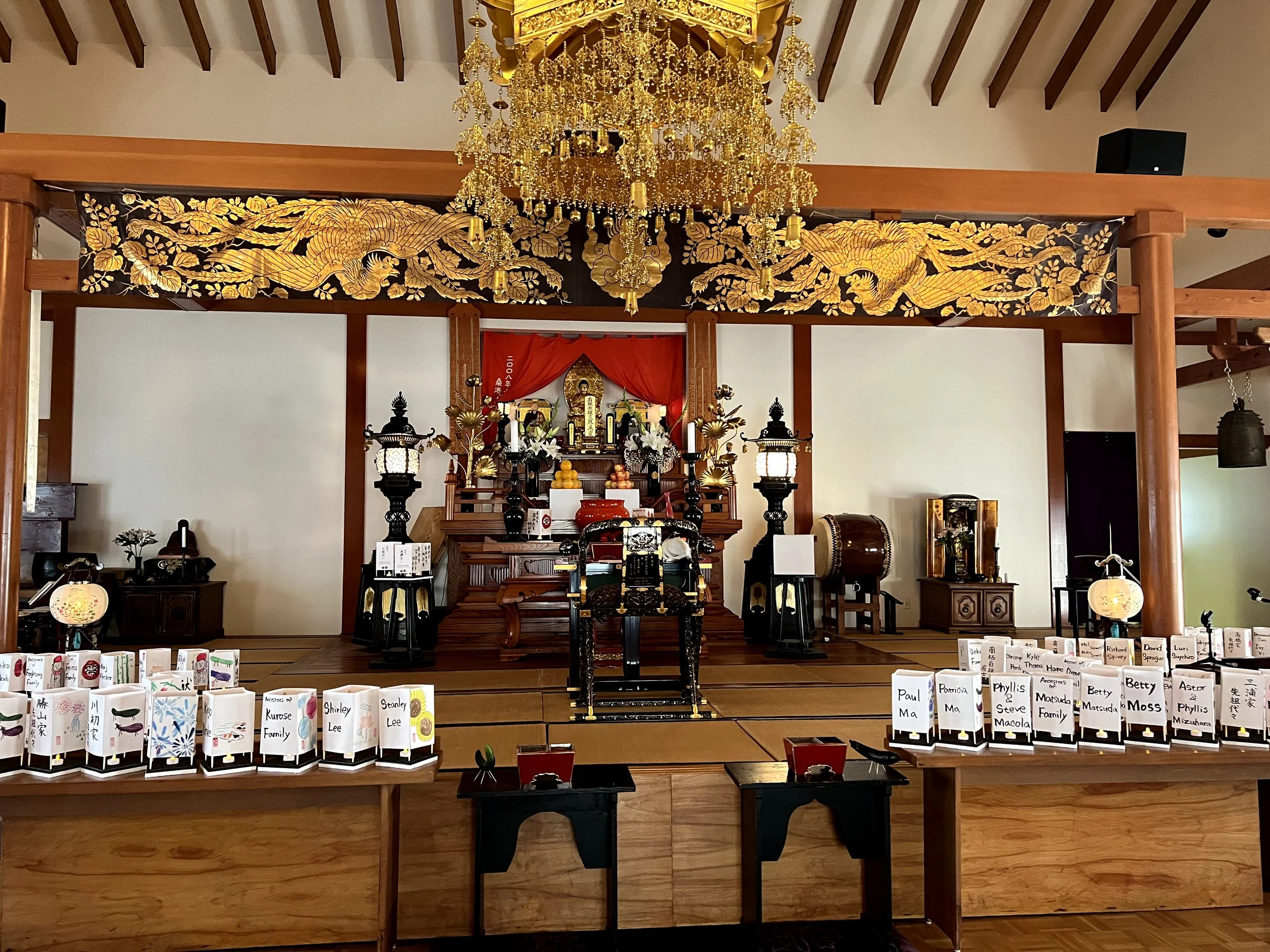
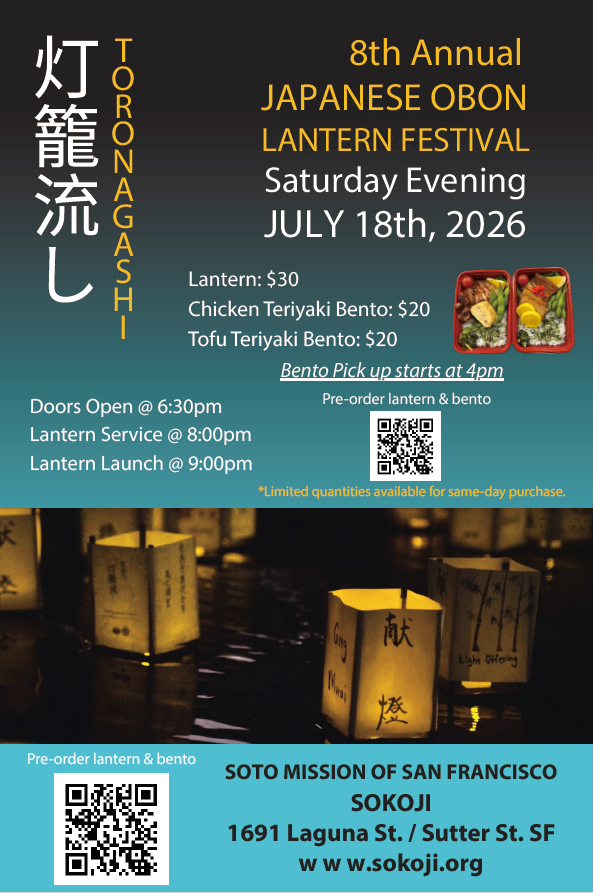
In Japan, it is said that the spirits of our ancestors come back annually to visit us for several days in middle of July of the lunar year. It is at this time that food is offered at the altar and a visit to the grave is made to welcome and remember our ancestors.
Hanamatsuri (Buddha’s Birthday) 釈尊降誕会 花祭り
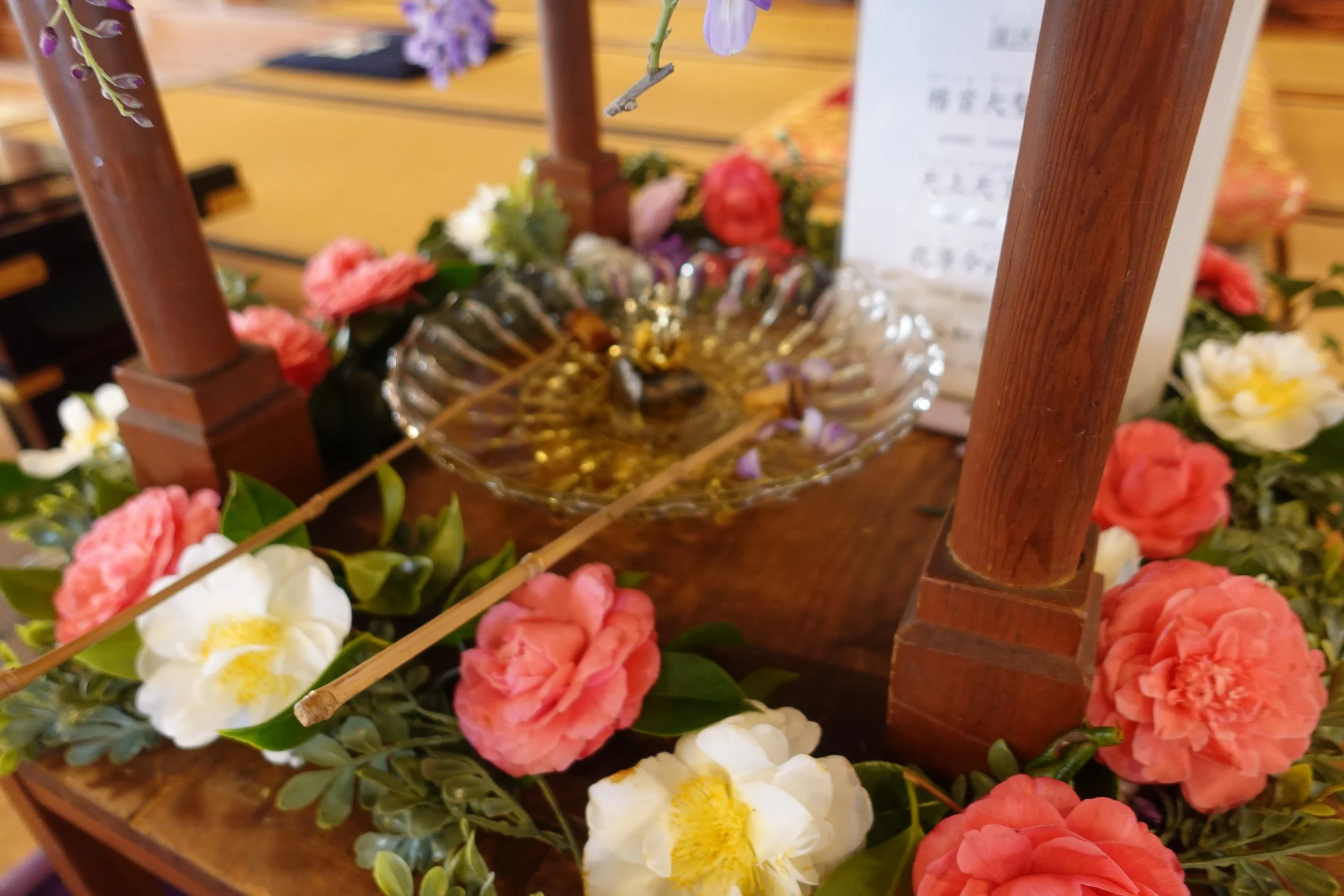
Buddha’s Birthday 釈尊降誕会 花祭り
April 5th (Sun) 11:00am-1:00pm
Please feel free to stop by
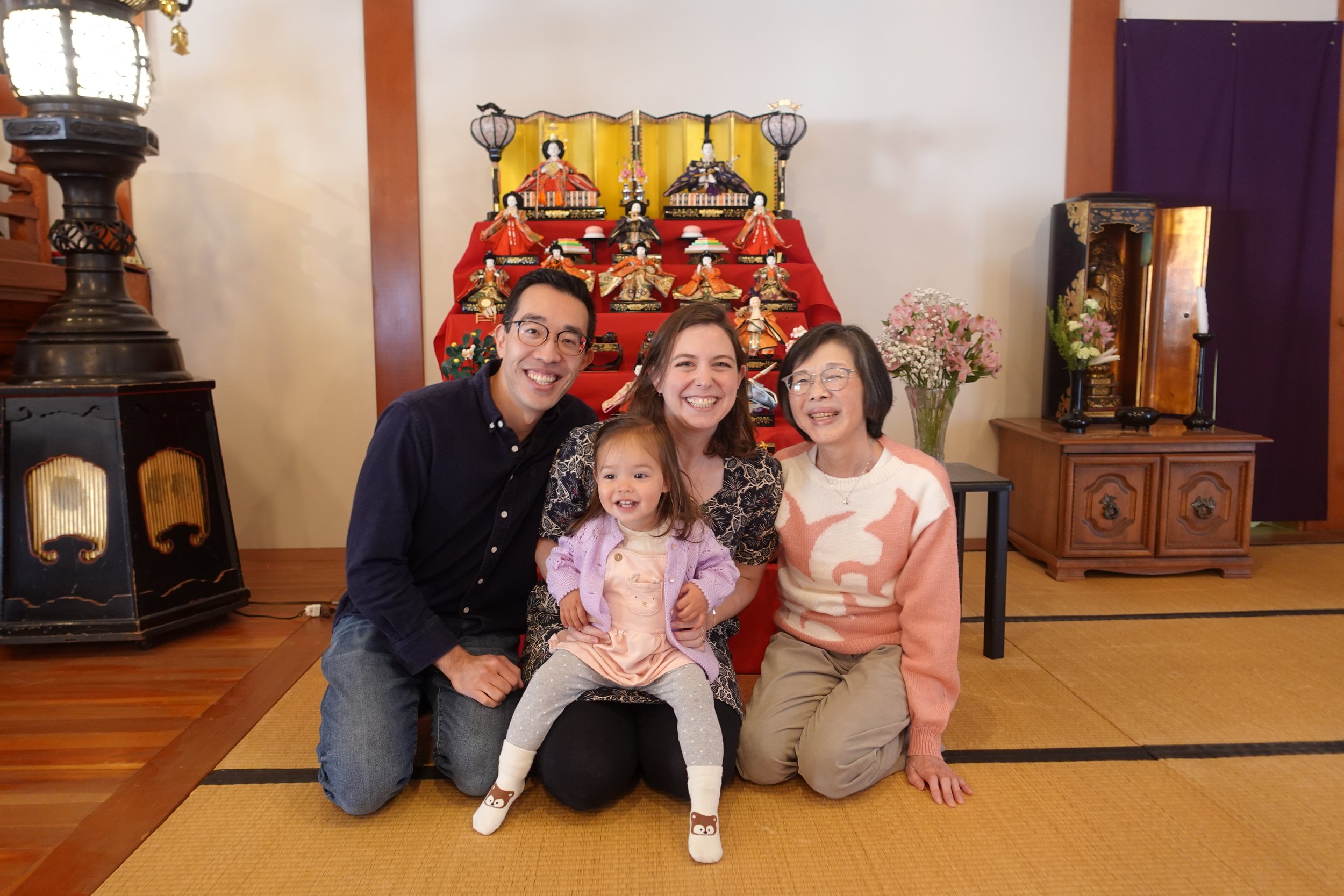
Hinamatsuri (Girls Day) Photo Session ひな祭り撮影会
Girls Day Photo Session ひな祭り撮影会
March 1st (Sun) 11:00am-1:00pm
Please feel free to stop by
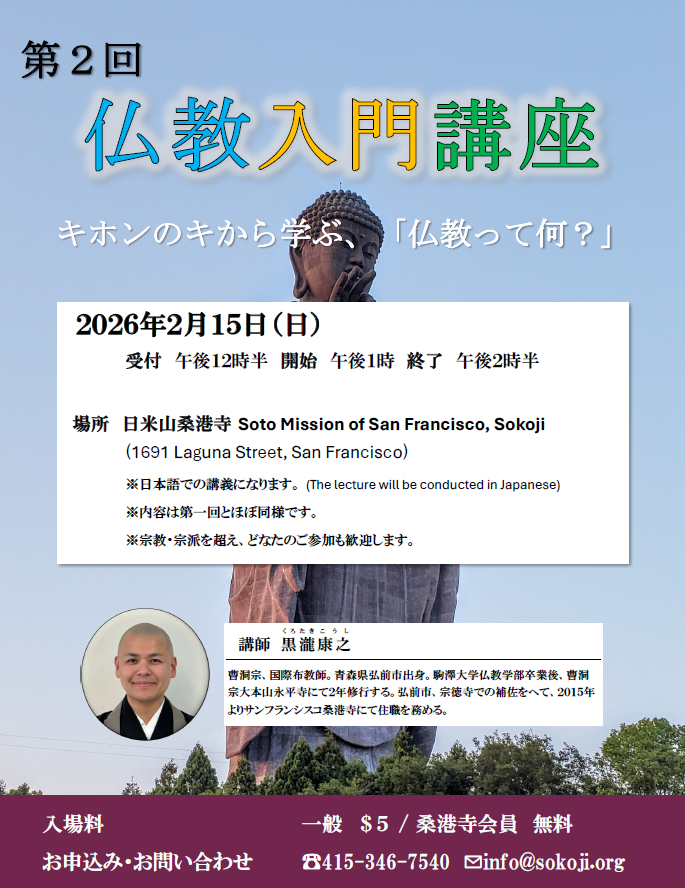
Buddhist Lecture For Beginners 仏教入門講座
Buddhist Lecture For Beginners 仏教入門講座
February 15th, 1 pm (日本語)
March 8th, 1 pm (English)
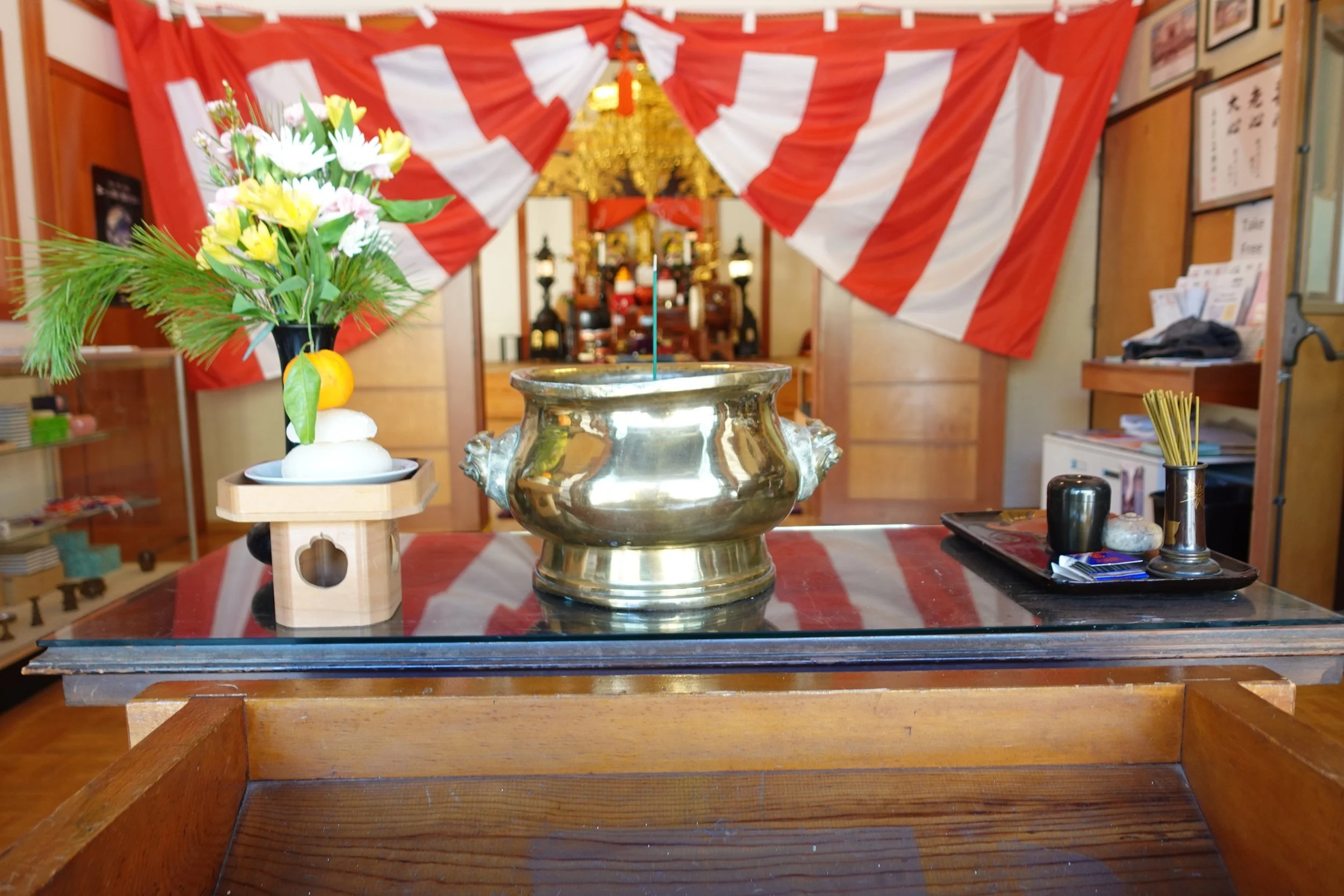
Year-End & New Year Events 桑港寺年末年始イベントまとめ
Sokoji New Year Events
Mochi Pounding もちつき
Midnight Bell Ringing 除夜の鐘
New Year’s Temple Visiting 初詣
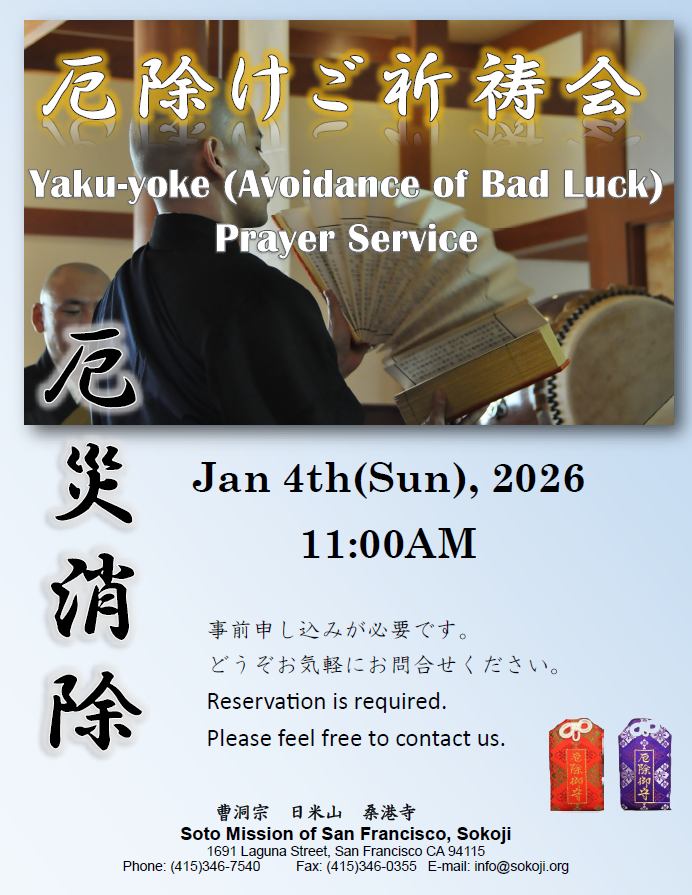
Avoidance of Bad Luck Prayer 厄除け祈祷
Memorial Service for Dolls 人形供養

Ningyo Kuyo (Memorial Service for Dolls) 人形供養
人形供養 Memorial Service for Dolls
January 18th (Sun) 11:00am
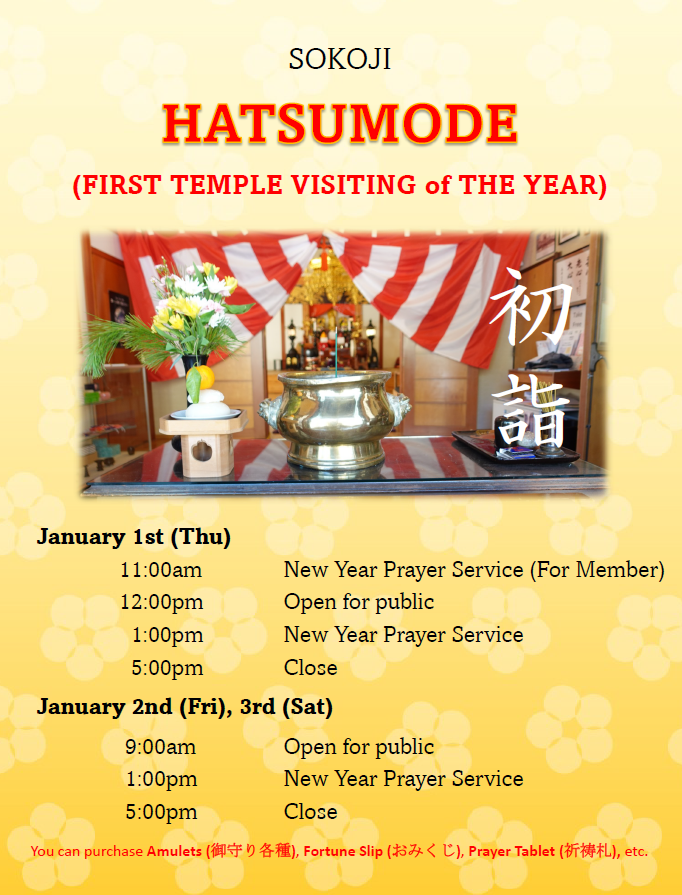
Hatsumode (First Temple Visiting of the Year)
At Sokoji, we hold Hatsumode (New Year’s temple visit) during the first three days of the New Year.
On January 1st, the temple opens at noon, and the New Year blessing service begins at 1:00 p.m.
On January 2nd and 3rd, the temple opens at 9:00 a.m., and the New Year blessing service begins at 1:00 p.m.
At the venue, you can purchase various items such as omamori (Amulet), omikuji (fortune slip), and prayer tablet.
Please invite your family and friends and come visit the temple to welcome the New Year.
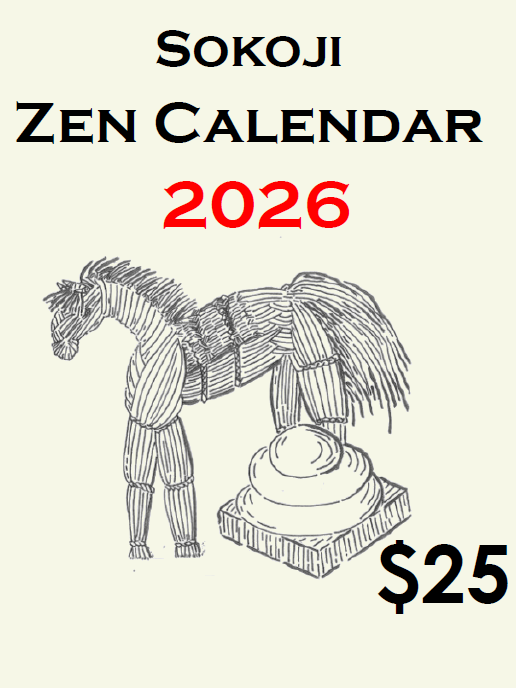
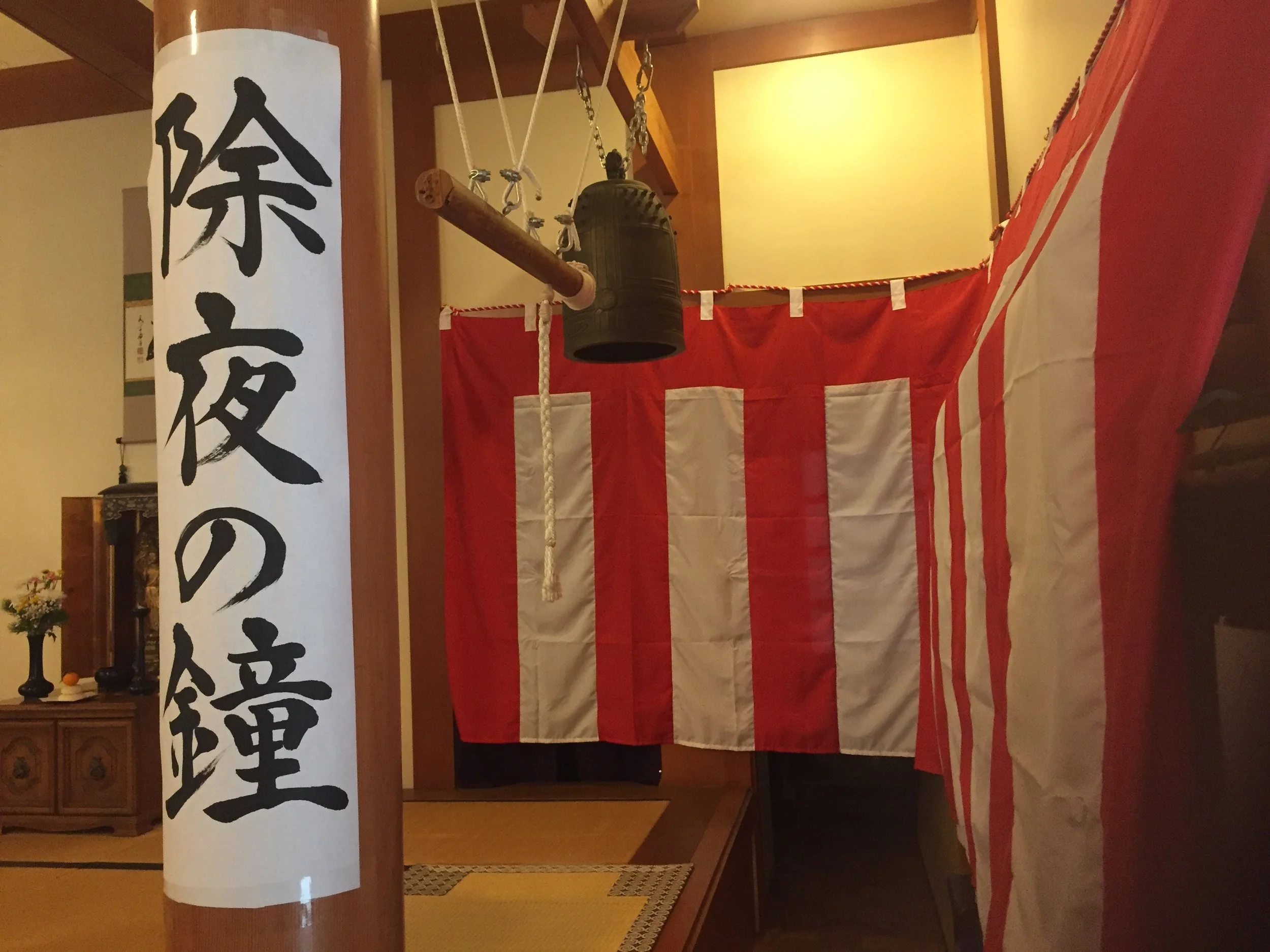
Joya-no-kane (Midnight Bell Ringing on New Year’s Eve)
Joya-no-kane is a Japanese Buddhist cultural tradition in which the bell is struck 108 times on New Year’s Eve to welcome the New Year with a purified mind.
At Sokoji, many participants gather every year, and each person has the chance to strike the bell.
After the New Year begins, we will offer the New Year blessing service, praying for everyone’s good health and happiness in the coming year.
During this event, you can also purchase prayer talismans, omamori charms, omikuji fortunes, and shiratama zenzai (sweet red bean soup with mochi).
At the soba restaurant across the street, “Soba Katsu,” special New Year’s Eve soba will also be sold in conjunction with this event — please enjoy it as well.
We look forward to seeing many of you there.
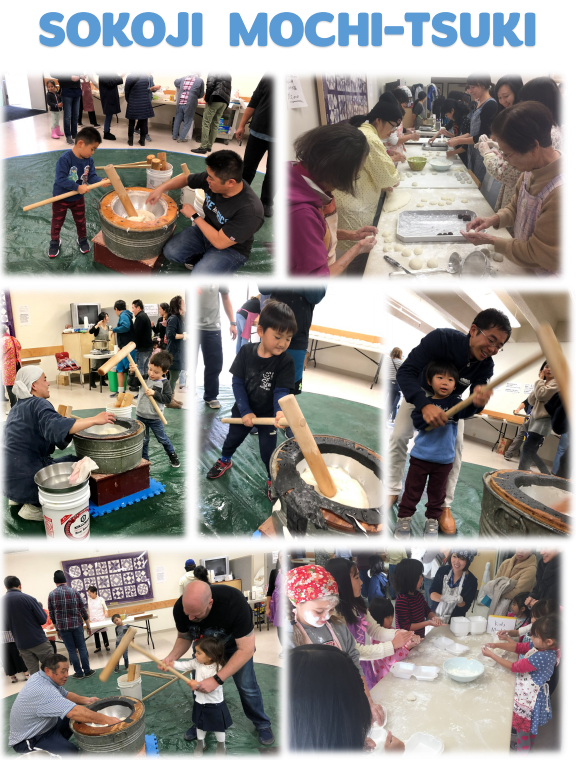
Mochi tsuki (Mochi Pounding)
At Sokoji, we hold a mochi-pounding event every year at the end of the year, and it gets very lively with many participants.
Mochitsuki is a traditional Japanese event in which steamed glutinous rice is pounded with an usu (mortar) and a kine (wooden mallet) to make mochi. It carries the meaning of praying for a good harvest and the family’s health, and is generally held around New Year or on celebratory occasions.
There is also a tradition of decorating the family altar or household shrine with kagami-mochi and eating mochi for New Year.
On the day of the event, you can experience mochi-pounding, purchase mochi for children (they will make round mochi themselves), and purchase kenchin-jiru soup.
We cannot guarantee the purchase of mochi on the day of the event, so we kindly ask that you place your order in advance.

7-5-3 Ceremony
The Soto Mission of San Francisco Sokoji will hold its annual Shichi-go-san Ceremony on Sunday, November 16, 2025 at 10:30 a.m., 12:00 noon., 1:30 pm., and 3:00 p.m. at 1691 Laguna Street in San Francisco’s Japantown.
Shichi-go-san, which literally translates to Seven-Five-Three, is a traditional Japanese rite of passage celebration for children ages three, five and seven. This event occurs in Japan on November 15th of each year. Since the years of 3-5-7 are crucial years for a child's growth, special blessings are offered at this time. On this day, boys (ages three and five) and girls ages (three and seven) dress up either in traditional Japanese clothes (hakama, kimono, obi) or formal western dress and go to a shrine with their parents. Children are given long, thin, red and white chitose ame (thousand year candy) inside bags with illustrations of a crane and turtle– a symbol of long life and happiness. The red and white colors of the chitose ame are an auspicious color combination in Japan. These symbols indicate wishes for a child’s good health and growth.
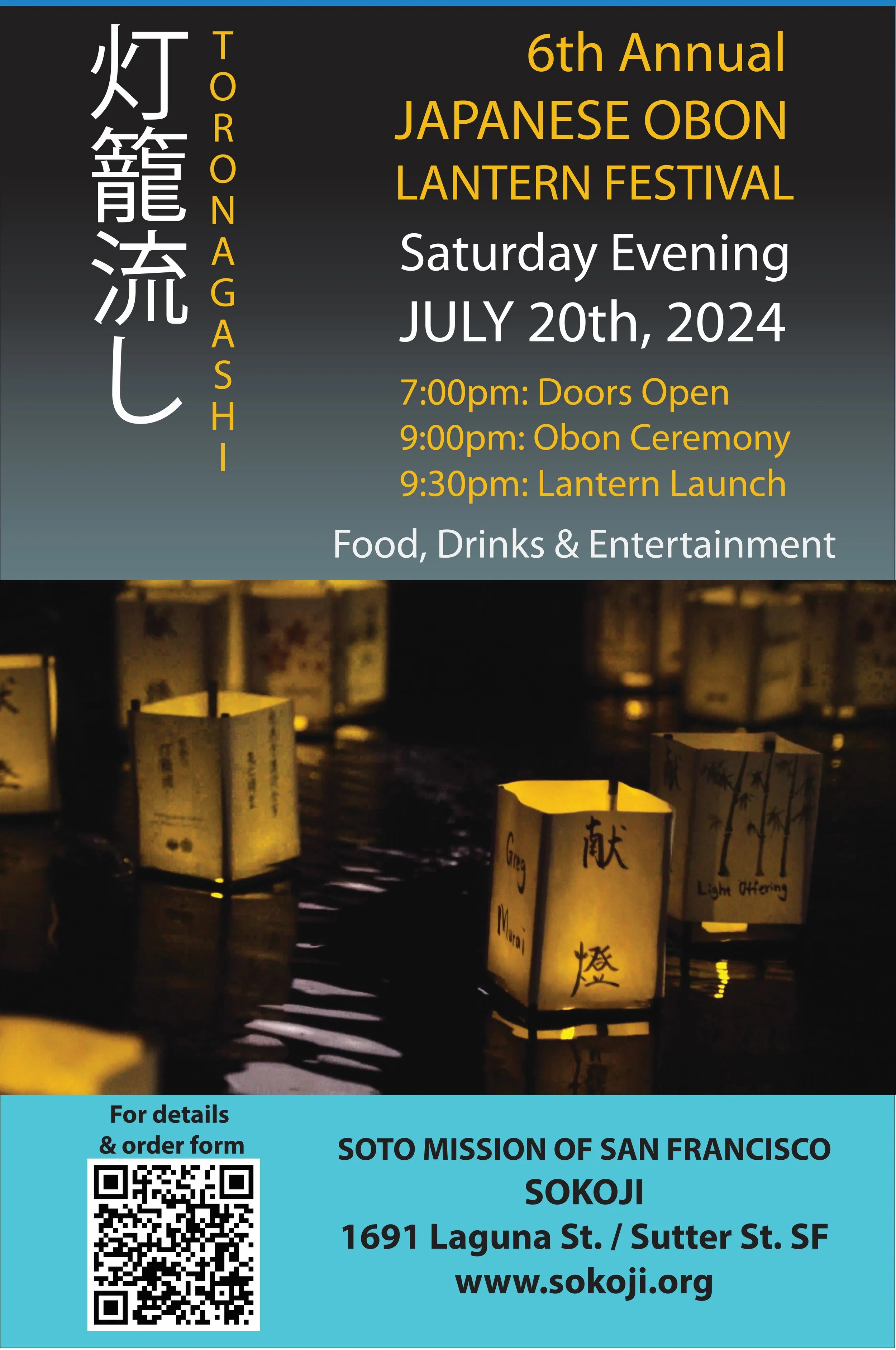
Toro Nagashi 2025
In Japan, it is said that the spirits of our ancestors come back annually to visit us for several days in middle of July of the lunar year. It is at this time that food is offered at the altar and a visit to the grave is made to welcome and remember our ancestors.
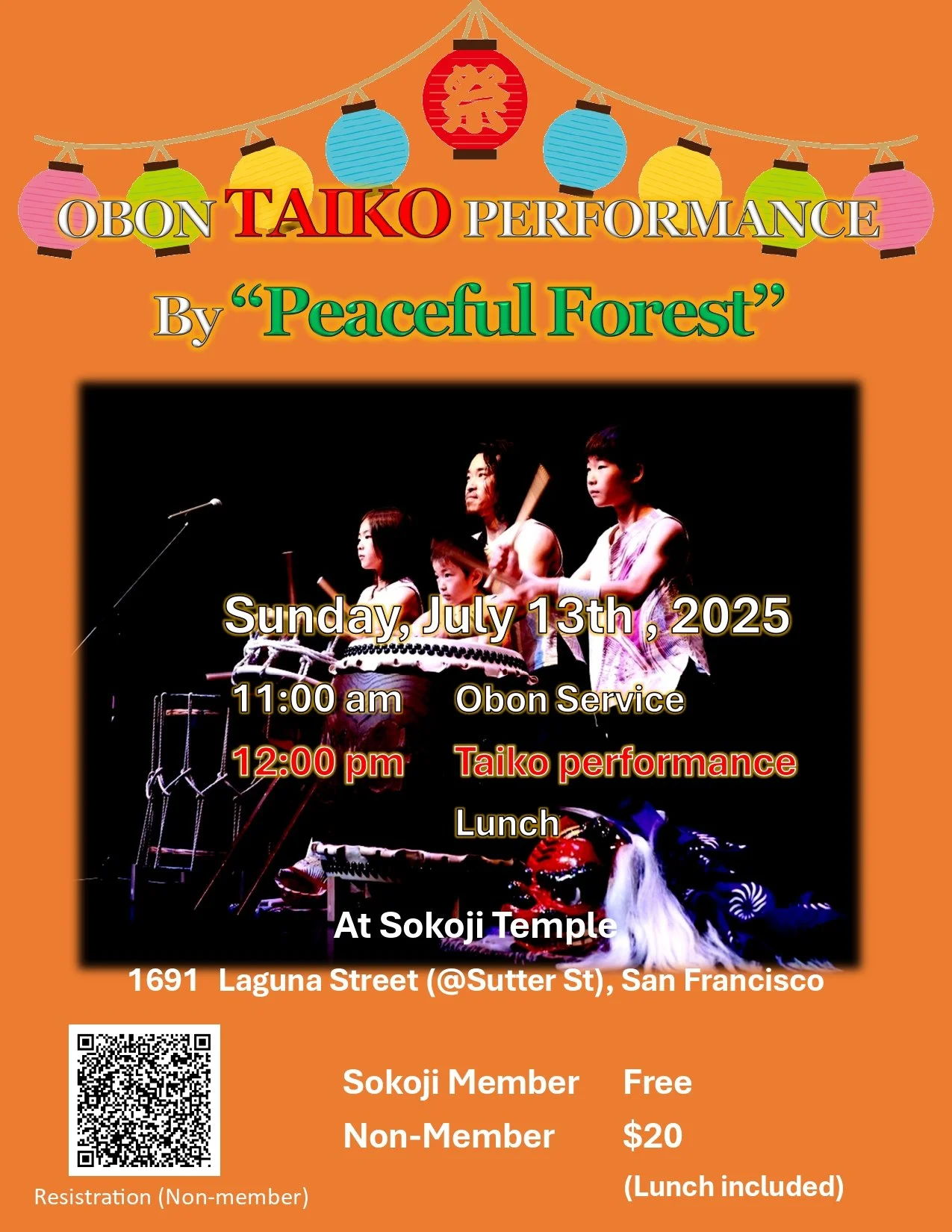
Obon Taiko Performance 2025
Join us for a special Taiko drumming performance during our Obon service at Sokoji! Experience the vibrant rhythms of traditional Japanese drumming as we come together to honor our ancestors and celebrate community.
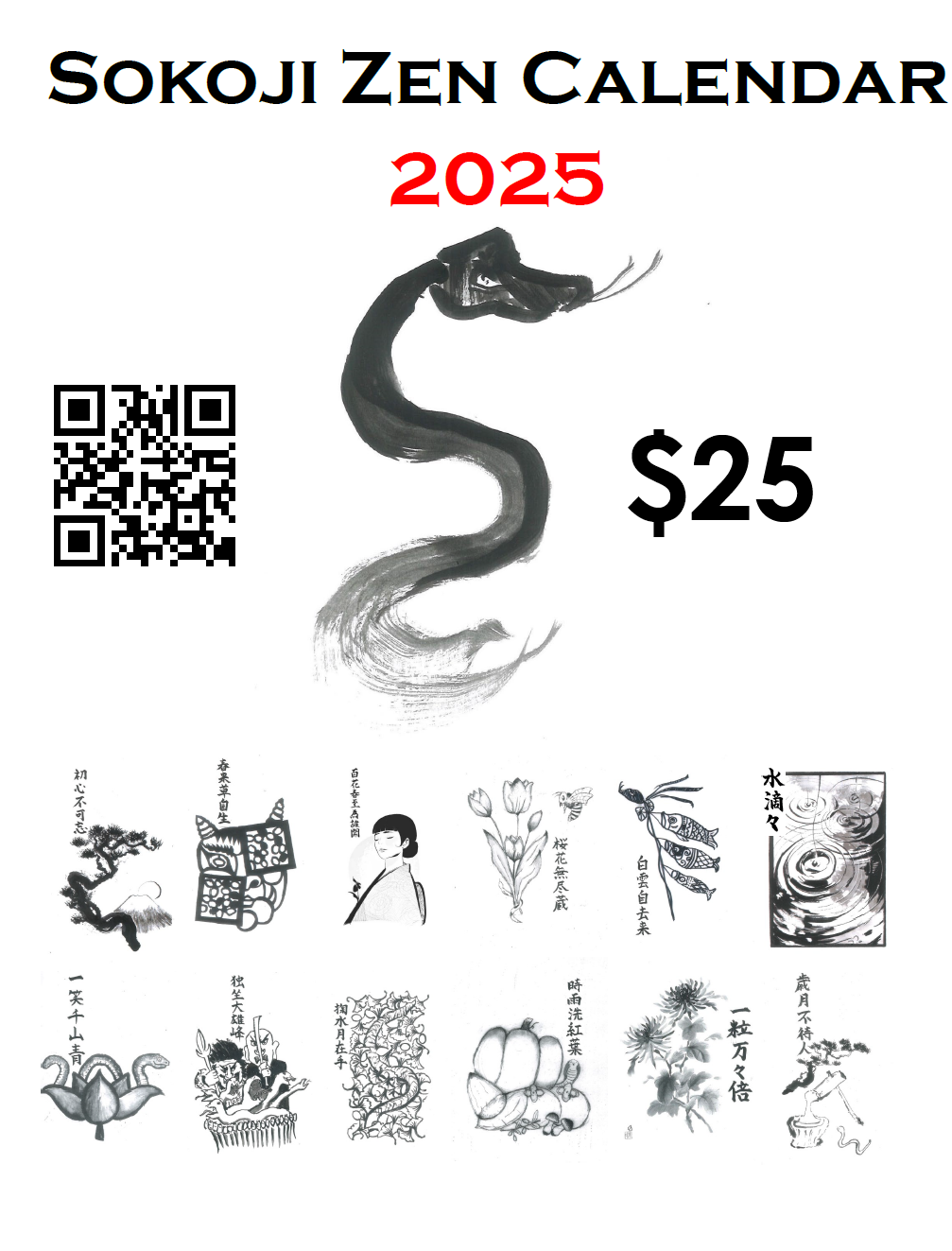
SOKOJI ZEN CALENDAR 2025
Step into 2025 with the serenity and community spirit of the Sokoji Zen Calendar. Every page showcases the collective artistic soul of our Sokoji members and dedicated community individuals, blending rich Zen teachings with heartfelt artwork.
Toro Nagashi 2024
In Japan, it is said that the spirits of our ancestors come back annually to visit us for several days in middle of July of the lunar year. It is at this time that food is offered at the altar and a visit to the grave is made to welcome and remember our ancestors.